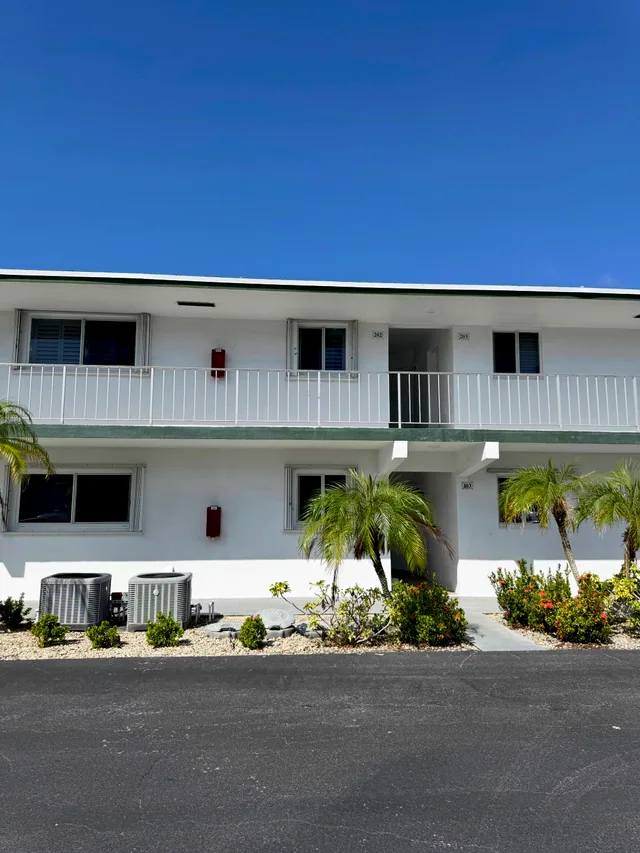
Tequesta Westwood Ave Condo Water-Damage Case Study
An out-of-state owner was weighing repairs against an as-is sale after a sewer backup, mold concerns, insurance uncertainty, and 55+ association requirements complicated the condo closing path.
The situation
This ground-floor Tequesta condo had more than an ordinary cosmetic problem. A sewer backup had damaged part of the unit, mold was a concern, and the owner was trying to understand what insurance might cover while living outside Florida.
The sale also depended on association paperwork, age restrictions, assessments, title documents, and the condition of older systems. The useful comparison was between managing repairs from another state and selling with those unknowns reflected in written terms.
Seller privacy: names and identifying transaction details are omitted. Street name, city, and year are shown to give the story useful local context.
Tequesta 55+ condo exterior reviewed as part of the saleOlder condo kitchen reviewed during the as-is condition assessmentOlder electrical panel reviewed as a potential insurance and repair issue
What made the sale harder than a normal listing
Water or sewer damage can create several separate questions: what was damaged, whether the source has been corrected, whether mold testing or remediation is needed, what insurance may cover, and what a future buyer or insurer will require.
A 55+ condo adds another layer. Association approval, age requirements, rental restrictions, assessments, estoppel balances, and building rules can narrow the buyer pool even before the unit condition is considered.
What FL Home Buyers reviewed
We reviewed the visible unit condition, older electrical equipment, the association and title path, the seller's location and timing, and which questions still needed confirmation before a closing date could be trusted.
An as-is buyer can take on repair risk, but cannot bypass the association, clean title, seller authority, or required closing documents. Those items still need to be handled directly and in writing.
What could have delayed closing
Association approval, an estoppel letter, an assessment, insurance-claim documents, title items, seller notarization, and questions about electrical or water damage could each affect timing.
The practical mistake is promising a date before those dependencies are known. A realistic closing plan leaves room for the association and title company to finish their work.
When a cash sale may not be best
If insurance will fund the repairs, the owner has time to manage contractors, and the repaired unit is easy to finance and resell, completing the work before listing may produce a higher gross price.
A direct sale becomes more useful when the owner is remote, the repair scope is uncertain, association costs continue each month, or the seller values a defined as-is path more than managing the project.
Records worth checking before you sign
These are starting points, not legal, tax, or title advice. A title company, attorney, CPA, or association manager should confirm anything that affects authority to sell, payoff, taxes, liens, assessments, or closing approval.
Need to compare your options?Tell us the property condition, timeline, payoff, and what you are trying to avoid. We will give you a clear written path.