
The Real Cost of Selling a House in Florida (2026 Breakdown)
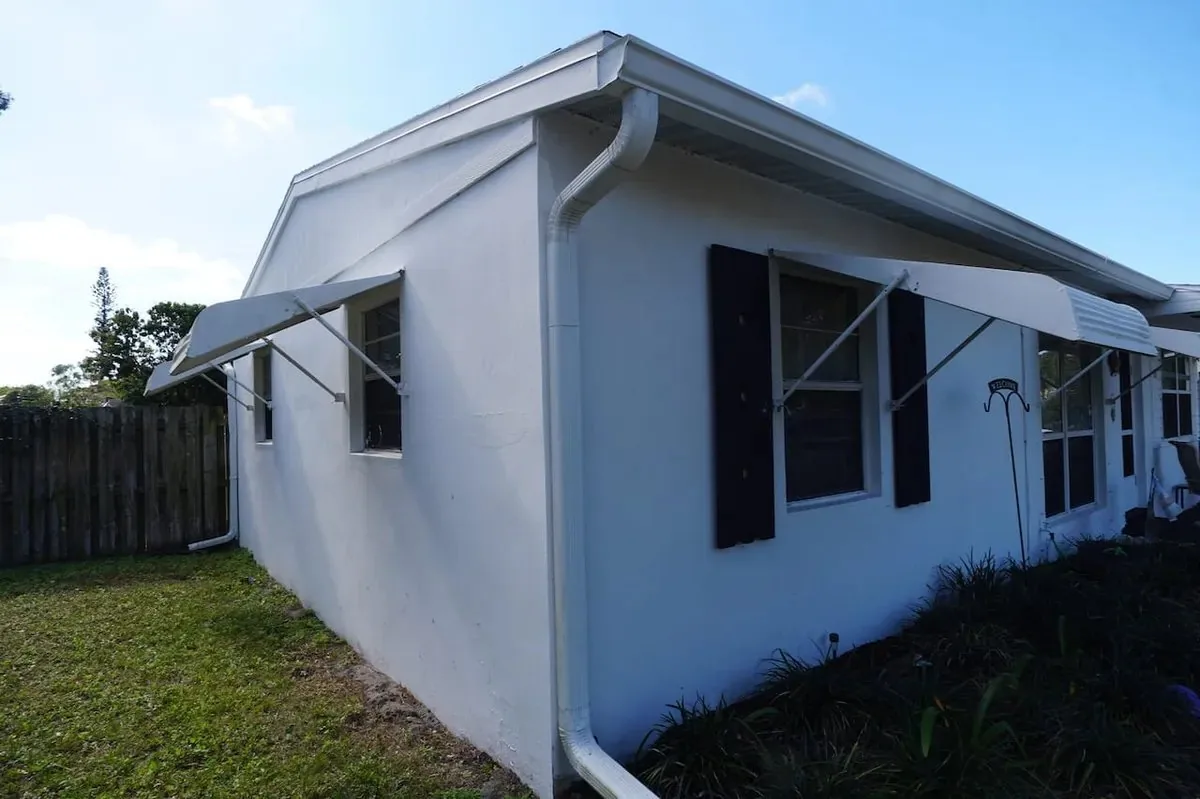
Build a seller budget from your contract, payoff statement, repair quotes, and closing estimate. See which costs reduce your closing proceeds and which you pay before the sale.

Written by Max Cohen
Founder, FL Home Buyers · Florida real estate since 2014
Quick Answer
How much does it cost to sell a house in Florida? There is no single percentage that fits every sale. Start with the agreed price, then subtract your negotiated fees, taxes, buyer credits, mortgage payoff, and other liens. Add any repairs and carrying costs you pay separately. The example below shows the arithmetic; replace its assumptions with written numbers for your property.
Table of Contents
A Selling-Cost Worksheet for a $350,000 Sale
Illustration only: this is a made-up budget, not an average Florida transaction, a fee quote, or an offer from FL Home Buyers. It assumes a $350,000 sale outside Miami-Dade, seller-paid original owner's title coverage, and the specific costs below. Your contract may allocate costs differently.
- Sale price
- $350,000
- Assumed contract price.
- Negotiated brokerage fees
- $17,500
- Illustrative 5% total; no commission rate is required or standard.
- Documentary stamp tax
- $2,450
- 3,500 taxable $100 units × $0.70, outside Miami-Dade.
- Original owner’s title policy
- $1,825
- $575 on the first $100,000 + $1,250 on the next $250,000; before additional charges or applicable discounts.
- Settlement services
- $750
- Illustrative closing-agent charge; obtain an itemized quote.
- Property-tax proration
- $1,750
- Illustrative seller share; the actual bill, closing date, and contract control.
- Amount before mortgage and other liens
- $325,725
- $350,000 − $17,500 − $2,450 − $1,825 − $750 − $1,750.
- Mortgage payoff
- $250,000
- Assumed payoff through closing, not the loan balance from an old statement.
- Illustrative closing proceeds
- $75,725
- $325,725 − $250,000, assuming no other liens, credits, or charges.
- Repairs and photos paid before closing
- $7,000
- Assumed $6,000 repair budget + $1,000 photography/staging budget.
- Amount remaining after those earlier costs
- $68,725
- $75,725 − $7,000; before other carrying costs, moving costs, or any income tax.
Do not subtract a prepaid repair bill again from your closing proceeds. Keep two totals: the cash the closing agent expects to disburse and your overall budget after expenses paid along the way. Add seller credits, association charges, delinquent taxes, additional liens, and any other property-specific costs before relying on either total.
Agent Commissions: Use Your Agreement
Read the listing agreement and any separate compensation agreement. Identify the amount you agreed to pay, what services it covers, when it is earned, and whether you also agreed to pay buyer-broker compensation. The 5% in this example is an assumption, not a recommended or required rate.
A direct sale can have a different fee structure, but do not assume it releases an existing brokerage obligation. Ask your broker about the agreement before signing another contract.
Florida Closing Costs Explained
Documentary Stamp Tax
The Florida Department of Revenue lists the deed tax outside Miami-Dade as $0.70 per $100, or portion of $100, of taxable consideration. For a straightforward $350,000 sale, that is $2,450. Miami-Dade has a separate rate and surtax rules, so ask the closing agent to calculate that county's charge.
A cash purchase does not by itself remove this tax. Your contract can allocate payment, but the Department says all parties to the document remain liable regardless of who agrees to pay.
Title Insurance and Settlement Services
For original owner's coverage, the Florida Department of Financial Services lists $5.75 per $1,000 for the first $100,000, then $5 per $1,000 through $1 million of coverage. On $350,000, $575 + $1,250 = $1,825.
That is the base premium, not the entire closing bill. Ask about applicable reissue rates, endorsements, policy fees, and settlement services. The contract determines which party pays which charges. Give the closing agent any prior owner's policy so the agent can check whether a reduced rate applies.
Taxes, Association Charges, and Payoffs
Request the tax-proration calculation, association estoppel information, and payoff statements early. The closing date matters: interest and other charges can change the amount due. A mortgage balance on a monthly statement is not necessarily the payoff needed to release the lien.
Check tax records through your local property-tax offices. Tell the closing agent about special assessments, overdue dues, open liens, and any payment plan. Ask which items will be paid at closing and which remain your responsibility.
Pre-Sale Repairs and Staging
Start with a written scope and local quotes. A statewide roof or plumbing allowance cannot tell you what your house needs. Compare three options: repair before listing, offer a permitted buyer credit, or sell in the current condition at an agreed price.
- Roof and insurance: gather permit history, inspection findings, contractor quotes, and the buyer's actual insurance requirements. Roof age alone does not settle the issue.
- Electrical, plumbing, and HVAC: separate safety or lending concerns from cosmetic work. Ask what must be completed before this buyer can close.
- Paint, cleanup, staging, and photography: agree on a budget and who pays it. Spending more does not guarantee an equal price increase.
Selling as-is can avoid seller-funded renovation, but condition still affects the offer. Read inspection and cancellation terms. A repair credit also needs the buyer's lender's approval when financing is involved; it may not solve a repair that must happen before closing.
Holding Costs Until Closing
Use your actual bills and the proposed closing date. Include mortgage payments, insurance, taxes, utilities, association dues, and maintenance. If the mortgage payment includes tax and insurance escrow, do not count those same amounts twice. Identify any CDD charge already included in the tax bill.
For a cash-flow budget, include the full payment you must make. For an economic comparison, distinguish interest from principal that reduces the loan balance. Test both the planned closing date and a delayed closing; neither a financed offer nor a cash offer guarantees completion.
The sell-or-hold guide explains how to compare ongoing costs with a sale without treating an estimate as a recommendation.
Federal Tax Is a Separate Calculation
Taxable gain is not the same as sale proceeds after paying the mortgage. Under IRS Topic 701, eligible taxpayers may exclude up to $250,000 of gain, or up to $500,000 for qualifying married couples filing jointly. both ownership and main-home use tests must be met for at least two years during the five years before sale; prior use of the exclusion and other rules also matter.
Rental use, depreciation, an inherited basis, a prior home sale, or a partial exclusion can change the answer. Have a tax professional review your records using IRS Publication 523. Do not assume a mortgage payoff or a cash buyer makes the gain tax-free.
Compare Written Offers on the Same Basis
Ask the agent or closing professional for a net sheet for each actual offer. Use the same payoff date and list every cost paid by the seller. A listing price is not an accepted offer, and an online cash-offer range is not a commitment.
- Price and deductions: record the written price, credits, commissions, closing costs, mortgage payoff, and other liens.
- Work before closing: identify repairs, cleanup, permits, and any money you must advance.
- Timing: use the contract date, title readiness, payoff availability, and any approval deadlines to estimate carrying costs.
- Contract risk: compare deposits, bank letter, escrow confirmation, or title-company contact, inspections, financing, cancellation rights, and assignment terms.
- Moving and possession: confirm when you must leave, what may stay, and any occupancy agreement or holdback.
A higher-price offer can still produce more money after costs. A lower-price offer may fit a repair budget or deadline better. Our pricing explanation describes what affects an as-is offer; the written contract and closing estimate should show the numbers for your home.
Frequently Asked Questions
Who pays closing costs in Florida?
The contract allocates many charges between buyer and seller. Ask for an itemized estimate rather than relying on local custom or a blanket “we pay closing costs” statement. Mortgage debt, liens, taxes, and association balances still need to be accounted for.
Is $1,825 the entire title-company bill on a $350,000 sale?
No. It is the example's original owner's title-insurance base premium. Settlement services, endorsements, applicable fees, and reduced-rate eligibility can change the bill.
How do I know what I will receive?
Request a seller net sheet using the written offer and current payoff information, then review the final settlement statement. Keep separately paid expenses in your overall budget so you neither miss them nor subtract them twice.
Want to Compare a Written Offer?
Get a written cash offer with repair, closing-cost, and seller-cost assumptions spelled out before you compare options.
Get My Cash Offer
Max Cohen
Founder · Buying Florida homes since 2014