
Last updated: January 2026
Sell Your Hurricane Damaged House in Florida
Last updated: February 2026
Roof damage? Water intrusion? Wind damage? Total loss? We buy Florida homes with hurricane damage as-is for cash. No repairs needed. No waiting for insurance. Close in 14-30 days.
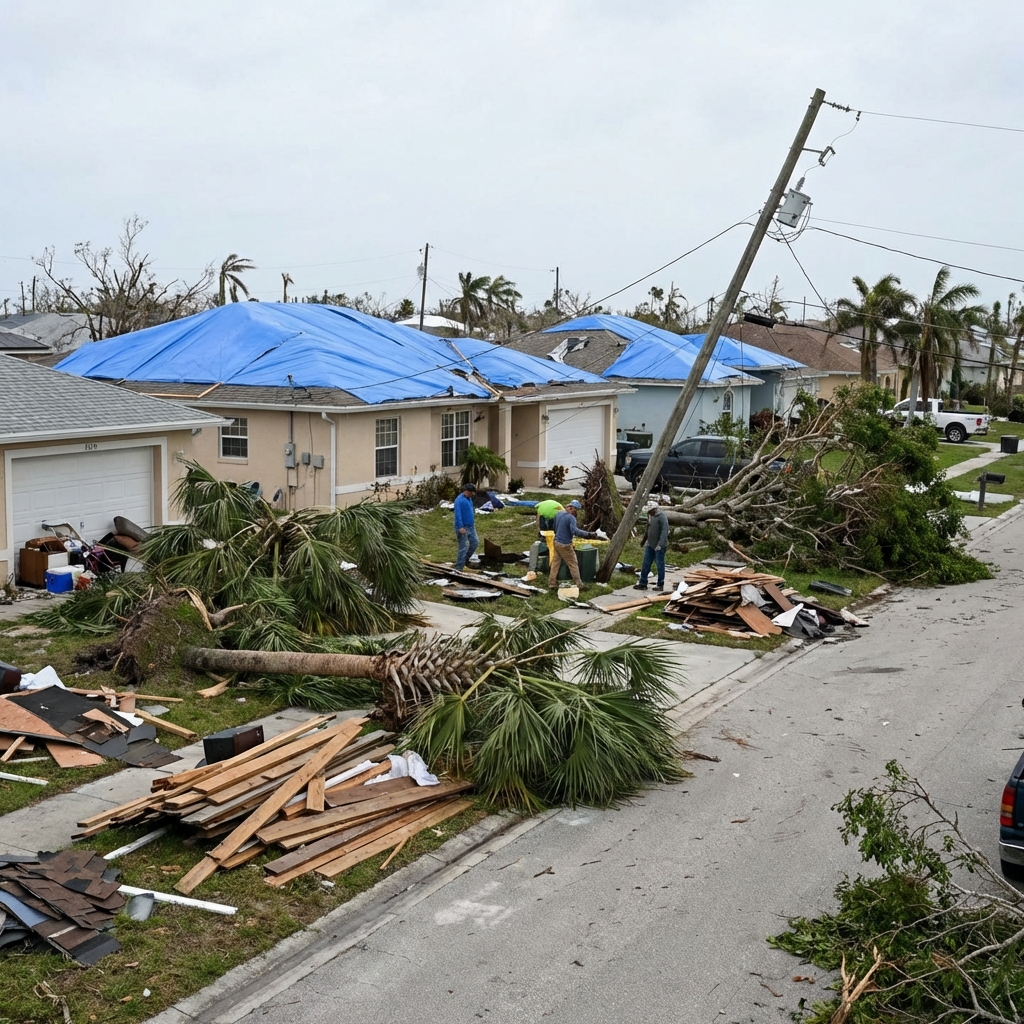
Hurricane damage often includes roof damage, fallen trees, and water intrusion
Florida's Hurricane Reality
Florida faces more hurricanes than any other U.S. state. Since 2017 alone, major hurricanes including Irma, Michael, Ian, Idalia, and others have caused billions in property damage. The 2024 hurricane season brought devastating storms that left thousands of Florida homeowners with damaged properties—and difficult decisions about their future.
For many homeowners, the aftermath of a hurricane brings overwhelming challenges: insurance claims that drag on for months, contractors who are booked for years, costs that exceed insurance coverage, and the emotional toll of living in or maintaining a damaged home. Some simply want to move on.
Florida's Insurance Crisis Makes Everything Harder
Florida's property insurance market has collapsed since 2020. Major carriers have left the state, premiums have tripled or quadrupled, and deductibles have increased from 2% to 5-10% of home value. After a hurricane, many homeowners discover their coverage is inadequate, their claim is denied, or their insurer is insolvent.
Types of Hurricane Damage We See
Roof Damage
Missing shingles, damaged decking, lifted tiles, or complete roof destruction. The most common hurricane damage—and the most expensive to repair.
Water Intrusion
When roofs or windows fail, water enters the home. This causes drywall damage, mold growth, flooring destruction, and ruined personal property.
Wind Damage
Structural damage from high winds, damaged soffits and fascia, broken windows, and compromised structural integrity.
Storm Surge & Flooding
Coastal and low-lying areas experience salt water flooding, destroying flooring, walls, electrical, and HVAC systems. Often requires gutting to the studs.
Tree & Debris Impact
Fallen trees crash through roofs, lanais, and walls. Airborne debris causes significant damage to siding, windows, and structures.
Total Loss
Some homes are beyond repair—completely destroyed by the storm or so extensively damaged that demolition is the only option.
Recent Major Florida Hurricanes
Florida has experienced a devastating series of major hurricanes in recent years. If your home was damaged in any of these storms—or previous ones—we can help:
| Hurricane | Year | Primary Impact Area |
|---|---|---|
| Hurricane Milton | 2024 | Tampa Bay, Central Florida |
| Hurricane Helene | 2024 | Big Bend, Tampa Bay (storm surge) |
| Hurricane Idalia | 2023 | Big Bend, Nature Coast |
| Hurricane Ian | 2022 | Southwest Florida (Lee, Charlotte Counties) |
| Hurricane Michael | 2018 | Panhandle (Mexico Beach, Panama City) |
| Hurricane Irma | 2017 | Florida Keys, Southwest, Central Florida |
Understanding Repair Estimates
After a hurricane, you may receive repair estimates from different sources. Here's what to expect:
Insurance Adjuster Estimate
Typically the lowest estimate. Adjusters work for the insurance company and often miss damage or undervalue repairs. Common to see 30-50% lower than actual costs.
Contractor Estimate
Reflects actual market costs for materials and labor. After major hurricanes, contractor prices increase 20-40% due to demand. These estimates are usually most accurate.
Public Adjuster Estimate
Public adjusters work for you and often find additional damage. Their estimates typically exceed insurance adjuster estimates by 50-200% or more.
The Gap Problem
Many Florida homeowners face a significant gap between what insurance pays and what repairs actually cost. With hurricane deductibles of 5-10% of home value (often $15,000-$50,000+) plus underpaid claims, we regularly see homeowners facing $30,000-$100,000+ out-of-pocket to complete repairs. This is why many choose to sell instead.
Regional Hurricane Impact in Florida
Different Florida regions face unique hurricane risks. Here's how recent storms have affected key areas:
Southwest Florida (Lee, Collier, Charlotte)
Hurricane Ian (2022) caused catastrophic damage—particularly in Fort Myers Beach, Sanibel, and Pine Island. Thousands of homes remain damaged or unrepaired. Storm surge reached 18+ feet in some areas.
Tampa Bay Area
Long considered overdue for a direct hit, Tampa Bay experienced significant storm surge from Hurricane Helene (2024). Many waterfront properties flooded for the first time in decades.
Florida Panhandle
Hurricane Michael (2018) struck as a Category 5, devastating Mexico Beach and Panama City. Years later, damaged properties remain throughout the region.
Florida Keys & Southeast
Hurricane Irma (2017) caused extensive damage throughout the Keys and southeast Florida. Many older homes received significant roof and water damage.
Selling With an Open Insurance Claim
Selling With an Open Insurance Claim
Many hurricane-damaged homeowners have open insurance claims when they decide to sell. This is more common than you might think, and there are several ways to handle it:
Option 1: Keep the Claim, Sell As-Is
You continue pursuing your insurance claim and receive any settlement. We purchase the property as-is, factoring current condition into our offer. This allows you to potentially receive insurance proceeds plus our purchase price.
Option 2: Assign the Claim
Depending on your policy, you may be able to assign insurance claim rights to us at closing. We assume responsibility for pursuing the claim and making repairs. This provides you certainty and a clean exit.
Option 3: Factor Into Purchase Price
If you've already received insurance proceeds or expect to, we can factor this into the purchase structure. For example, you might receive $X from us plus retain $Y from insurance.
Working With Public Adjusters
Many hurricane damage claims benefit from a public adjuster—a licensed professional who works for you (not the insurance company) to maximize your claim. If you're pursuing a claim, a public adjuster often recovers significantly more than a homeowner alone. We work with several reputable adjusters and can make introductions if helpful.
Why Homeowners Sell After Hurricanes
Insurance Doesn't Cover Everything
High deductibles (often 5-10% of home value), excluded damages, and policy limits mean out-of-pocket costs can exceed $50,000+. Many can't afford the gap.
Contractor Availability
After major hurricanes, qualified contractors are booked 12-24+ months out. Living with blue tarps and damage while waiting isn't sustainable.
Claims Are Denied or Underpaid
Insurers increasingly deny or underpay legitimate claims. Fighting takes years and legal fees. Some just want to move forward.
Emotional Toll
Returning to a damaged home daily is emotionally exhausting. The ongoing stress of repairs, claims, and uncertainty becomes too much.
Future Risk
After experiencing a major hurricane, many decide they don't want to live with that risk anymore. They want to relocate inland or out of Florida.
Insurance Becoming Unaffordable
Post-hurricane, insurance rates often increase dramatically—sometimes becoming completely unaffordable, particularly in coastal areas.
| Option | Timeline | Your Effort | Certainty |
|---|---|---|---|
| Repair & Sell Traditionally | 12-24+ months | High (manage repairs) | Uncertain |
| List As-Is on MLS | 3-12 months | Medium | Low |
| Cash Sale to FL Home Buyers | 14-30 days | Minimal | High |
How We Buy Hurricane Damaged Homes
Contact Us
Tell us about your property and damage. Share any insurance documentation, adjuster reports, or contractor estimates you have.
Property Evaluation
We assess the damage, estimate repair costs, and determine post-repair value. This helps us make a fair cash offer.
Cash Offer
You receive a written cash offer. We explain our valuation and discuss any insurance claim structuring if applicable.
Close & Move On
We close with a local title company. You receive cash and can leave hurricane stress behind. We handle all repairs post-closing.
Real Example: Hurricane Ian Damage in Fort Myers
After Hurricane Ian (2022), a Fort Myers homeowner faced $180,000 in damage—roof replacement, complete interior remediation, and HVAC replacement. Their insurance policy had a $42,000 hurricane deductible and their claim was disputed. They'd already waited 8 months with no resolution.
We purchased the home for $215,000 cash, as-is. The seller kept their right to pursue the insurance claim (which eventually settled for $127,000 after legal fees). They used our cash to buy a new home in a less flood-prone area and received insurance proceeds months later.
Result: Seller closed in 19 days, escaped months of construction management, and ultimately received over $300,000 total between our purchase and insurance settlement.
📖 Related Guide
How to Sell a Hurricane-Damaged House in FloridaFrequently Asked Questions
Can I sell my house with hurricane damage?
Yes. You can sell a hurricane-damaged house as-is for cash. You do not need to complete repairs or settle your insurance claim first. We buy homes with pending claims, denied claims, or no insurance at all. Florida law requires disclosure of known defects, but does not prevent sale of damaged property.
Do I need to complete insurance repairs before selling?
No. We buy hurricane damaged homes before repairs are completed. If you have an open insurance claim, we can structure the purchase so you keep the claim proceeds, assign them to us, or factor them into the sale price. This gives you flexibility based on your situation.
What if my insurance claim was denied?
We still buy. Many Florida homeowners have had hurricane claims denied or significantly underpaid. We purchase as-is regardless of insurance outcome. If you want to continue pursuing the claim (perhaps with a public adjuster or attorney), you may be able to retain those rights while selling to us.
How soon after a hurricane can I sell?
You can sell immediately after a hurricane. However, local conditions may affect closing timelines—title companies, courts, and recording offices may be impacted in disaster zones. We work through these challenges and can often close within 2-4 weeks after major storms, depending on local infrastructure.
Will I get less because of hurricane damage?
Yes, a damaged home is worth less than an undamaged one. Our offer reflects current condition minus estimated repair costs. However, when you factor in the cost, time, and stress of managing repairs yourself—plus the uncertainty—many sellers find our cash offer provides similar or better net proceeds with far less hassle.
Ready to Sell Your Hurricane Damaged Home?
Get a no-obligation cash offer. Any level of damage. Close in as little as 14 days and leave hurricane stress behind.
Selling Hurricane-Damaged Property in Florida
- Florida homeowners filed over 1.1 million insurance claims from hurricanes Ian, Nicole, and Idalia (FLOIR data).
- Average hurricane claim payout in Florida: $47,000 — often far less than actual repair costs.
- Under §627.70132, insurers must acknowledge claims within 14 days and pay or deny within 90 days.
- Hurricane damage often reveals pre-existing issues (mold, termites, foundation) that make traditional sales nearly impossible.
- We buy hurricane-damaged houses as-is — no need to wait for insurance settlements or contractor availability.
Legal Questions Specific to Your Situation
Can I sell my house while an insurance claim is pending?
Yes. We can structure the purchase so that the insurance claim is either assigned to us or settled before closing. In many cases, we make an offer that accounts for the damage — you don't need to wait months for the insurance company to process your claim.
What if the damage exceeds my insurance coverage?
Many Florida homeowners discover their coverage is inadequate after a hurricane. We buy houses as-is regardless of the gap between damage and insurance payout. You keep whatever insurance settlement you've received, and we handle the repairs ourselves.
Florida remains the most expensive state for homeowners insurance, with annual premiums averaging $5,800–$10,400/year ($485–$865/month). Good news: Citizens recommending 2.6% average rate decrease — first since 2015 — with 3 in 5 policyholders expected to save ~$359/year, effective June 1, 2026 (if approved by OIR). Legal reforms are stabilizing the market and attracting more private carriers back to the state.
📊 2026 Florida Insurance Crisis Data
Source: Florida Realtors®, ATTOM Data, Houzeo, Citizens Florida · Data as of February 2026
Get Your Cash Offer
Tell us about your hurricane damaged property. We'll give you a fair cash offer within 24-48 hours.
Related Resources
We Handle This Situation in Every Florida County
See local market data and get a fair cash offer in your county: