
Last updated: January 2026
Sell Your House With Code Violations in Florida
Last updated: February 2026
Open permits, unpermitted work, accumulated fines, or safety violations? We buy properties with code issues as-is for cash. You sell the property; we handle the code compliance. Close in 7-21 days.
Get My Cash Offer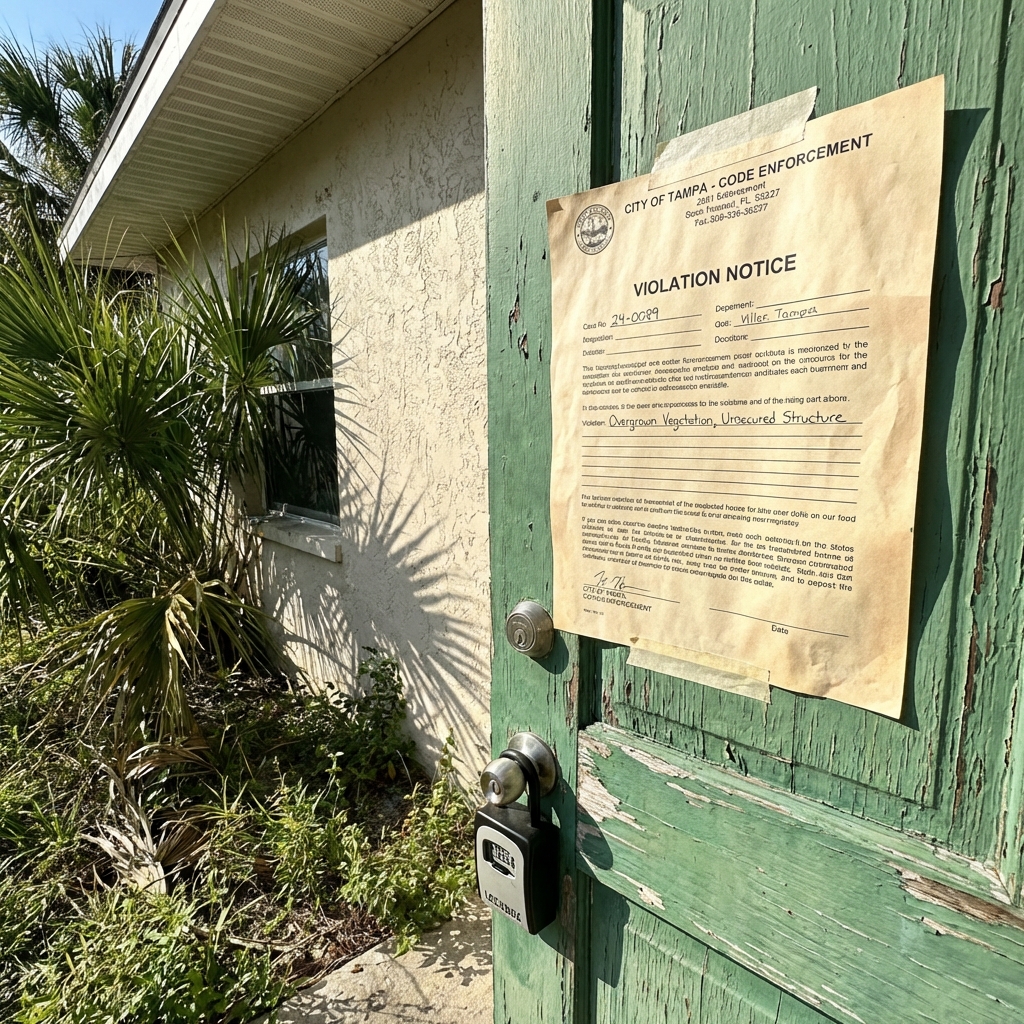
Understanding Code Violations in Florida
Code violations can accumulate quickly and create serious problems when you try to sell your home. Florida municipalities actively enforce property codes, and violations can result in daily fines, liens on your property, and even foreclosure actions. Worse, traditional buyers typically can't purchase a home with active code violations—banks won't lend on such properties.
Whether you inherited a property with longstanding violations, did some work without permits, or have let maintenance issues pile up, code violations can feel like an insurmountable obstacle. But there's a solution: selling to a cash buyer who can handle the compliance issues after purchase.
Code Violations Can Cost Thousands Per Day
Many Florida municipalities levy fines of $50-500 per day per violation. A $100/day fine left unaddressed for a year becomes $36,500 in liens against your property. These fines accrue whether you know about them or not, and they must be paid (or negotiated) before the property can transfer.
Common Types of Code Violations
Open/Expired Permits
Work was started but never inspected or approved. This includes additions, HVAC, electrical, plumbing, and roofing permits that were never closed out. Banks won't lend on homes with open permits.
Unpermitted Construction
Additions, enclosed patios, garages converted to living space, or other work done without proper permits. Resolving often requires opening walls for inspection or even demolition.
Property Maintenance
Overgrown vegetation, peeling paint, damaged fencing, broken windows, trash accumulation, or pool maintenance issues. These can generate daily fines quickly.
Safety Violations
Missing smoke detectors, unsafe electrical, structural hazards, or uninhabitable conditions. These may require the property to be vacated and can trigger immediate enforcement.
Zoning Violations
Using property in ways not permitted by zoning—operating a business, too many unrelated occupants, or prohibited accessory structures. Resolution may be complex.
Utility Violations
Illegal connections, meter tampering, or unpermitted well/septic systems. These can involve multiple agencies and require significant work to resolve.
How Code Violations Affect Your Ability to Sell
Code violations create multiple obstacles to selling through traditional channels:
Financing Issues
Banks and mortgage lenders require properties to meet minimum standards and have all permits closed. FHA and VA loans have particularly strict requirements. With active code violations or open permits, most buyers simply cannot get financing to purchase your property. This eliminates 80%+ of potential buyers immediately.
Title Issues
Accumulated code fines become liens on the property. These liens must be satisfied at closing—they come directly off your proceeds. A title search will reveal these liens, and title insurance won't be issued until they're addressed. Large accumulated fines can sometimes exceed the property's equity.
Disclosure Requirements
Florida law requires you to disclose known material defects, including code violations. Once disclosed, many buyers walk away. Those who remain often demand significant price reductions or want you to resolve violations before closing—which may not be feasible given timelines and costs.
Inspection Failures
Even if a buyer proceeds, their home inspector will flag code issues. Unpermitted work, in particular, raises red flags about what else might be wrong with the property. This often leads to renegotiations or cancelled contracts.
The Catch-22 of Code Violations
Many homeowners find themselves in an impossible situation: they can't afford to fix the violations, but they can't sell without fixing them (or finding a cash buyer who will buy despite them). Meanwhile, fines continue to accrue daily. This is exactly the situation we help solve.
Florida Code Enforcement: How It Works
Understanding Florida's code enforcement process helps explain why violations can become so serious:
Complaint or Inspection
Violations are identified through neighbor complaints, routine inspections, or permit audits. Once a violation is documented, the clock starts.
Notice of Violation
You receive a written notice specifying the violation and a deadline for compliance (typically 15-30 days for most issues, less for safety concerns).
Special Magistrate/Code Board Hearing
If not resolved, your case goes before a Special Magistrate or Code Enforcement Board. They can impose daily fines, often retroactive to the original violation date.
Fines Begin Accruing
Daily fines (typically $50-500/day depending on violation type and municipality) begin accruing. These fines are recorded as liens against your property.
Lien Enforcement
After a period (often 90 days), the municipality can record a certified lien, file for foreclosure, or pursue other collection actions.
Florida Municipalities Known for Aggressive Enforcement
While all Florida municipalities enforce codes, some are particularly aggressive:
- Miami-Dade County: Known for extensive permit requirements and enforcement
- Broward County cities: Including Fort Lauderdale, Hollywood, and Pembroke Pines
- HOA communities: Where both municipal AND HOA enforcement apply
- Historic districts: Additional architectural requirements and enforcement
- Coastal areas: Strict enforcement of flood zone and elevation requirements
Open Permits vs. Unpermitted Work: Key Differences
These two issues often get confused but have different implications for selling your property:
Open Permits
A permit was pulled, work was done, but the final inspection was never completed. This often happens when:
- Homeowners forget to call for final inspection
- Contractors disappear before completion
- Minor issues prevented passing inspection
- Years pass and the permit expires
Resolution: Often involves scheduling inspections, making minor corrections, and officially closing the permit. Costs range from a few hundred to several thousand dollars.
Unpermitted Work
Work was done without ever obtaining a permit. This is a more serious issue because:
- No inspection means unknown quality
- Bringing into compliance may require opening walls
- Some work may not meet current code
- Demolition may be required in extreme cases
Resolution: Requires "after-the-fact" permitting, inspections, and often corrective work. Costs can be substantial, especially for additions or major systems.
How to Check Your Property for Code Issues
Before listing your home, it's wise to check for potential code issues:
- Building Department Records: Visit your city or county building department to pull permit history. Many Florida municipalities offer online permit search.
- Code Enforcement Search: Check with the code enforcement division for any active violations or liens on your property.
- Property Appraiser Records: Compare the recorded square footage and room count to what actually exists—discrepancies suggest unpermitted work.
- Previous Inspections: Review any past home inspection reports for notes about unpermitted work.
- Owner's Knowledge: Did you or previous owners do work without permits? Garage conversions, room additions, and enclosed patios are common culprits.
We Do the Research for You
When you contact us, we research your property's permit history, code violation status, and any recorded liens. You don't need to figure all this out yourself—we'll tell you exactly what issues exist and what they mean for your sale.
Resolving Code Violations: Your Options
When facing code violations, you generally have four options:
Option 1: Fix the Violations
If violations are minor and you have the resources, fixing them is straightforward. However, unpermitted work often requires opening walls, hiring licensed contractors, and navigating the permit process—which can take months and cost tens of thousands. Plus, you still need to negotiate any accumulated fines.
Option 2: Negotiate Fine Reduction
Florida municipalities can reduce accumulated fines, especially if you've brought the property into compliance. You typically request a "reduction hearing" before the Code Enforcement Board. Reductions of 50-90% are possible, but not guaranteed. This works best when the underlying violation is already fixed.
Option 3: Demolition (Extreme Cases)
For unpermitted structures that can't be brought into compliance, demolition may be required. Some additions, converted garages, or accessory structures simply can't meet code and must be removed. This is costly and emotionally difficult, but sometimes necessary.
Option 4: Sell to a Cash Buyer As-Is
This is often the best solution. You sell the property with all its code issues to a buyer like FL Home Buyers. We purchase subject to all violations, assume responsibility for resolution, and you walk away with cash. We handle the permits, the fines, and the headaches.
| Factor | Fix Yourself | Sell to FL Home Buyers |
|---|---|---|
| Timeline | Months to years | 2-4 weeks |
| Out-of-Pocket Cost | Thousands to tens of thousands | $0 |
| Fines Continue Accruing | Yes, until resolved | No, we take over |
| Stress Level | High | Minimal |
How FL Home Buyers Handles Code Violations
As a licensed general contractor, we have the expertise and relationships to resolve code violations efficiently. Here's our process:
Violation Assessment
We research all violations, open permits, and liens against the property. We know which violations are easily resolved and which require significant work.
Lien Research
We calculate total accumulated fines and liens. Our experience helps us estimate realistic reduction amounts if we pursue fine reductions after purchase.
Fair Cash Offer
We make a cash offer accounting for violation resolution costs. This is typically less than market value but represents real money in your pocket without the hassle.
We Handle Resolution
After purchase, we bring the property into compliance. We have relationships with code enforcement offices throughout Florida and know how to navigate the process efficiently.
Real Example: $47,000 in Accumulated Fines in Hialeah
A homeowner had an unpermitted mother-in-law suite from the 1990s. When they tried to sell, the city cited the violation. Daily fines had accumulated quickly, reaching $47,000. Traditional buyers couldn't proceed, and the seller couldn't afford to demolish the addition and pay the fines.
We purchased the property, assuming responsibility for all fines and compliance. After closing, we worked with the city to legalize the addition (it met current code with minor modifications) and negotiated the fine down to $8,500.
Result: Seller walked away with $142,000 in 18 days. They had been stuck for over a year unable to sell through traditional channels.
Frequently Asked Questions About Code Violations
Can you sell a house with code violations in Florida?
Yes. You can sell a house with code violations to a cash buyer like FL Home Buyers. Traditional sales are nearly impossible because banks won't finance properties with open violations or permits, but we purchase with cash and assume responsibility for compliance.
What happens if you don't fix code violations?
Florida municipalities levy daily fines ($50-500/day), place liens on your property, and can pursue foreclosure for accumulated liens. The longer violations remain, the worse the situation becomes. Some violations can also result in criminal charges.
Will a buyer assume code violation responsibility?
As cash buyers, we assume responsibility for resolving code violations after purchase. At closing, the property and all associated issues become ours. You sell the property and walk away with cash—the violation issues become our problem to solve.
How do code violations affect home value?
Code violations typically reduce value by the estimated cost to cure plus a risk premium for the uncertainty involved. Accumulated liens and fines reduce value dollar-for-dollar. We factor all this into our offers while still providing fair value for you to move on.
Can code violation fines be reduced?
Yes. Florida municipalities can reduce fines through a Code Enforcement Board hearing, especially when violations are corrected. Reductions of 50-90% are common. We pursue these reductions after purchase to maximize our investment and can often achieve better results than individual homeowners.
Florida Code Violations & Building Compliance
Reference: Florida Statutes §162 (Code Enforcement)
- Florida Code Enforcement Boards can impose fines of up to $250/day for initial violations and $500/day for repeat violations (§162.09).
- Unpaid code fines become liens on the property under §162.09(3) — they must be satisfied at closing.
- Florida processed over 200,000 code violation cases statewide in 2025 — common violations include unpermitted work, overgrown lots, and structural issues.
- We buy houses with active code violations and handle the compliance process post-closing with our GC license (#CGC1534000).
- Under §553.80, local building officials have authority to condemn properties that are unsafe or fail to meet the Florida Building Code.
Legal Questions Specific to Your Situation
Can I sell a house with open code violations in Florida?
Yes. We buy houses with active code violations regularly. The violations are resolved as part of the sale or post-closing. As a licensed General Contractor (#CGC1534000), we handle the remediation ourselves — you don't need to fix anything before selling.
Can code violation fines be reduced?
Yes. Under §162.09, you can petition the Code Enforcement Board to reduce fines, especially if you're bringing the property into compliance. When we buy your house, we often negotiate fine reductions as part of the closing process.
Get Your Cash Offer Today
Code violations don't have to trap you in an unsellable property. Get a no-obligation cash offer and let us handle the compliance. Close in weeks.
As of February 2026, the Florida statewide median home price is $415,000, down from a $450,000 peak in 2022 but still 40% higher than pre-COVID levels. Homes are spending 77–80 days on the market — significantly longer than the national median of 50 days. Single-family inventory stands at 5.1 months for single-family homes and 9+ months for condos, signaling a more balanced market with buyers gaining negotiating leverage.
📊 2026 Florida Housing Market
Source: Florida Realtors®, ATTOM Data, Houzeo, Citizens Florida · Data as of February 2026
Get Your Cash Offer
Tell us about your property and its code issues. We'll give you a fair cash offer within 24-48 hours.
Related Resources
We Handle This Situation in Every Florida County
See local market data and get a fair cash offer in your county: