
Last updated: January 2026
Sell Your Flood Damaged House in Florida
Last updated: February 2026
Water intrusion? Mold growth? FEMA flood zone? Repetitive loss property? We buy Florida homes with flood damage as-is for cash. No remediation needed. No flood insurance required. Close in 14-30 days.
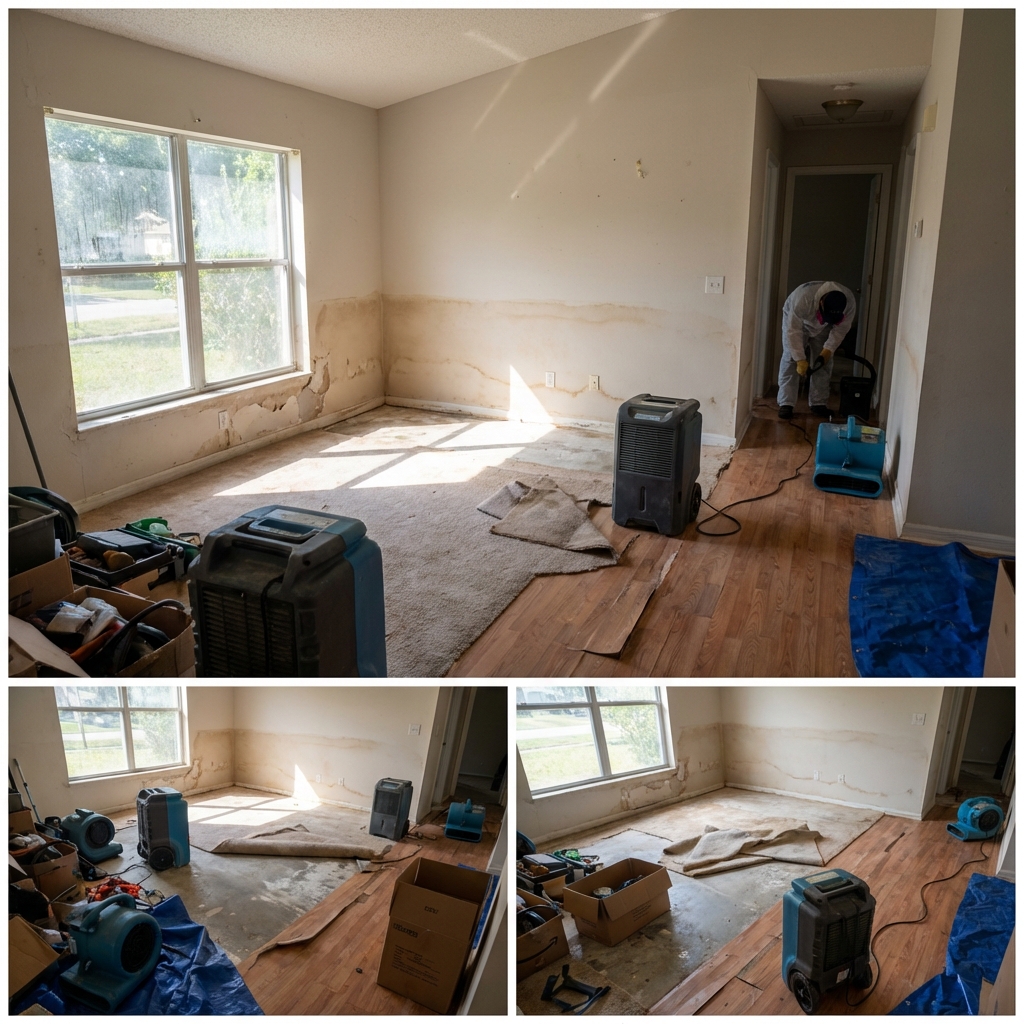
Flood damage often requires gutting to the studs and extensive remediation
Florida's Flood Reality
Florida is the most flood-prone state in America. With its low elevation, extensive coastline, heavy rainfall, and hurricane exposure, flooding affects hundreds of thousands of Florida properties. FEMA estimates that 1 in 4 Florida homes are in high-risk flood zones—and flooding regularly occurs outside these zones too.
Unlike hurricane wind damage, standard homeowners insurance does not cover flood damage. You need separate flood insurance, typically through NFIP (National Flood Insurance Program) or private carriers. Many Florida homeowners discover after a flood that they're either uninsured or underinsured.
Rising Flood Insurance Costs
FEMA's Risk Rating 2.0, introduced in 2021, has dramatically increased flood insurance costs for many Florida properties. Some premiums have increased 400-500%. Properties with flood claims or in high-risk zones face the steepest increases, making them difficult to sell traditionally.
Common Flood Damage Issues
Water Intrusion Damage
Floodwater destroys drywall, insulation, flooring, and cabinetry. Salt water (storm surge) is particularly destructive and corrosive to electrical and plumbing systems.
Mold Growth
Mold can develop within 24-48 hours of flooding. Once established, it spreads rapidly and requires professional remediation costing $10,000-$50,000+.
Foundation Damage
Repeated flooding or standing water can compromise foundations, cause settling, and create structural issues that require expensive repair.
Electrical & HVAC Damage
Flooded electrical panels, outlets, and HVAC systems often require complete replacement for safety. Costs run $15,000-$40,000+.
The Hidden Costs of Keeping a Flood Damaged Property
Many Florida homeowners underestimate the ongoing costs of owning a flood-damaged or flood-prone property. Beyond immediate repairs, you face:
- Escalating insurance premiums: NFIP rates increase annually, and Risk Rating 2.0 has dramatically raised costs for high-risk properties. Some Florida homeowners now pay $8,000-$20,000+ annually for flood insurance alone.
- Decreased property value: Flood history permanently affects property value. Studies show properties with flood history sell for 5-10% less than comparable homes without flood events.
- Financing difficulties: Conventional mortgages require flood insurance in high-risk zones. Buyers struggle to qualify when insurance costs exceed what lenders allow in debt-to-income ratios.
- Future claim limitations: The Substantial Damage Rule requires properties damaged more than 50% of their value to be elevated to current codes—often costing $50,000-$150,000+.
- Health risks: Mold exposure causes respiratory issues, allergic reactions, and long-term health problems. Some families cannot safely occupy flood-damaged homes until complete remediation.
Florida's Most Flood-Prone Areas
While flooding can occur anywhere in Florida, certain regions face significantly higher risk. If your property is in one of these areas, selling may be your best option before the next major flood event:
Southeast Florida
Miami-Dade, Broward, Palm Beach Counties: Low elevation, porous limestone geology, and rising sea levels create chronic flooding issues. King tides now flood streets that were dry 20 years ago. Many properties flood even without rain during high tide events.
Tampa Bay Area
Hillsborough, Pinellas, Pasco Counties: Extremely vulnerable to storm surge, as demonstrated by Hurricane Helene and other recent storms. Barrier islands and low-lying coastal areas face evacuation with every major storm.
Southwest Florida
Lee, Collier, Charlotte Counties: Hurricane Ian in 2022 caused catastrophic flooding, with many properties still unrepaired. Barrier islands like Fort Myers Beach, Sanibel, and Pine Island faced near-total destruction.
Central Florida
Orange, Osceola, Seminole Counties: Chain of lakes and river systems create inland flooding risk. Heavy rainfall events from slow-moving tropical systems cause widespread damage even far from the coast.
Florida Flood Statistics
- • Florida accounts for over 35% of all NFIP claims nationwide
- • Over 1.7 million Florida properties have substantial flood risk
- • Average Florida flood claim payout: $52,000
- • Properties outside flood zones still account for 25% of all claims
Understanding Elevation Certificates
An Elevation Certificate (EC) documents your property's elevation relative to the Base Flood Elevation (BFE) established by FEMA. This document significantly affects your property's insurability and value:
Above BFE
Properties with lowest floor above the Base Flood Elevation typically qualify for lower insurance rates and are more attractive to buyers. Each foot above BFE can reduce premiums significantly.
Below BFE
Properties below BFE face substantially higher insurance costs—often 3-5x more than elevated homes. Many of these properties become effectively unsellable through traditional channels.
If you have an elevation certificate showing your property is below BFE, traditional sale options are limited. Buyers requiring mortgages often cannot qualify due to insurance costs. We purchase properties regardless of elevation—if you're below BFE and struggling to sell, contact us.
What About Property Elevation?
Some homeowners consider elevating their property to reduce flood risk and insurance costs. While effective, elevation is extremely expensive:
- Slab-on-grade homes: $150,000-$300,000+ to elevate
- Pier and beam homes: $50,000-$150,000 to raise
- Timeline: 3-6 months, with significant disruption
- Permits and engineering: $10,000-$25,000 in additional costs
For many homeowners, selling as-is makes more financial sense than spending $100,000+ on elevation, especially if you're planning to relocate anyway.
Florida Flood Disclosure Requirements
Florida law requires sellers to disclose material facts that affect property value, including flood history. Specifically, you must disclose:
- Known flooding events: Any flooding that has occurred during your ownership
- Flood insurance claims: History of any NFIP or private flood insurance claims
- Water damage repairs: Any repairs made due to flood or water intrusion
- Current damage: Any existing flood damage or mold issues
- Flood zone status: Florida Statute 689.261 requires sellers to disclose if the property is in a designated flood zone
Disclosure Doesn't Prevent Sale
Many sellers worry that disclosing flood history means they can't sell. This isn't true—you just need the right buyer. We purchase properties with full disclosure. Your flood history doesn't scare us because we understand how to assess and manage flood risk.
Understanding Florida Flood Zones
Understanding Florida Flood Zones
FEMA designates flood zones that affect insurance requirements, property values, and buyer financing. Here's what they mean:
| Zone | Risk Level | Description |
|---|---|---|
| Zone VE, V | Highest | Coastal high hazard with wave action. Most expensive insurance. |
| Zone AE, A | High | 100-year flood zone. Flood insurance required with mortgage. |
| Coastal A | High | Inland portion of A zone with breaking wave hazard. |
| Zone X (shaded) | Moderate | 500-year flood zone. Insurance not required but recommended. |
| Zone X (unshaded) | Lower | Minimal flood hazard. Insurance optional. |
Repetitive Loss Properties
FEMA classifies properties with multiple flood claims as "repetitive loss." These properties have much higher insurance costs and are extremely difficult to sell. Categories include:
- Repetitive Loss (RL): 2+ claims of $1,000+ within 10 years
- Severe Repetitive Loss (SRL): 4+ claims of $5,000+ or 2+ claims exceeding property value
We Buy Repetitive Loss Properties
Traditional buyers struggle with repetitive loss properties due to insurance costs. We purchase these properties for cash regardless of claim history. If you're stuck with an "uninsurable" property, we can help.
How We Buy Flood Damaged Homes
Contact Us
Tell us about your property, flood history, current damage, and any insurance claims. The more information you can share, the faster we can evaluate.
Property Inspection
We assess current damage, flood zone, elevation, and remediation needs. We may review elevation certificates and flood zone maps.
Cash Offer
You receive a written cash offer factoring in flood zone risk, remediation costs, and post-repair value. No obligation to accept.
Close & Move On
We close with a local title company. You receive cash and leave flood concerns behind. We handle all remediation post-closing.
Real Example: Repetitive Loss in Bonita Springs
A homeowner in Bonita Springs had 4 flood claims over 12 years, making their property a "severe repetitive loss." Their NFIP insurance had been cancelled, and private flood insurance quoted $18,000/year—more than their property taxes. No traditional buyer would touch it.
We purchased the home for $195,000 cash. The property had minor current damage from the most recent flood. After purchase, we elevated the home's critical systems and sold to an investor willing to carry the insurance costs in exchange for rental income.
Result: Seller escaped an "unsellable" property, closed in 17 days, and avoided future flood insurance nightmares.
Frequently Asked Questions
Can you sell a flooded house in Florida?
Yes. You can sell a flood-damaged house as-is for cash. Florida law requires disclosure of flood history and material defects, but does not prevent sale. We buy homes with current flood damage, flood history, or in high-risk flood zones. Traditional buyers often can't get financing for these properties—we use cash.
Do I need to remediate mold before selling?
No. We buy houses with mold damage as-is. Professional mold remediation typically costs $10,000-$30,000+ depending on extent. We factor this into our cash offer so you avoid the upfront expense and hassle of managing remediation.
What if my house is in a FEMA flood zone?
We buy homes in all flood zones—Zone A, AE, VE, Coastal A, X, and others. Flood zone location affects property value and ongoing insurance costs but doesn't prevent us from purchasing. We understand flood zone implications and factor them into our offers.
Can I sell a repetitive loss property?
Yes. Repetitive loss and severe repetitive loss properties (those with multiple NFIP claims) are extremely difficult to sell traditionally due to insurance complications and buyer concerns. We buy these properties for cash regardless of claim history. If traditional buyers won't touch your property, we likely will.
Ready to Sell Your Flood Damaged Property?
Get a no-obligation cash offer. Any flood zone, any damage level. Close in as little as 14 days.
Selling a Flood-Damaged House in Florida
Reference: Florida Statutes §161 (Beach & Shore Preservation)
- Florida has more NFIP flood insurance policies than any other state — over 1.7 million active policies.
- Federal law requires flood disclosure, and Florida's §689.261 mandates sellers disclose flood zone status.
- Flood remediation costs average $10,000–$50,000+ for mold treatment, drywall replacement, and structural drying.
- Properties with repeated flood claims may be classified as Severe Repetitive Loss — making insurance extremely expensive.
- We buy flood-damaged houses as-is in all flood zones, including AE, VE, and X zones.
Sources: FEMA Flood Map Service · NFIP Statistics
Legal Questions Specific to Your Situation
Can I sell a house in a flood zone in Florida?
Yes. We buy properties in all flood zones. Traditional buyers often struggle to get affordable flood insurance, which makes financing difficult. We pay cash and factor flood risk into our offer — you don't need to worry about insurance transferability.
Florida remains the most expensive state for homeowners insurance, with annual premiums averaging $5,800–$10,400/year ($485–$865/month). Good news: Citizens recommending 2.6% average rate decrease — first since 2015 — with 3 in 5 policyholders expected to save ~$359/year, effective June 1, 2026 (if approved by OIR). Legal reforms are stabilizing the market and attracting more private carriers back to the state.
📊 2026 Florida Insurance & Flood Zone Data
Source: Florida Realtors®, ATTOM Data, Houzeo, Citizens Florida · Data as of February 2026
Get Your Cash Offer
Tell us about your flood damaged property. We'll give you a fair cash offer within 24-48 hours.
Related Resources
We Handle This Situation in Every Florida County
See local market data and get a fair cash offer in your county: